 Dutch website
Atheists and the Problem of Evil
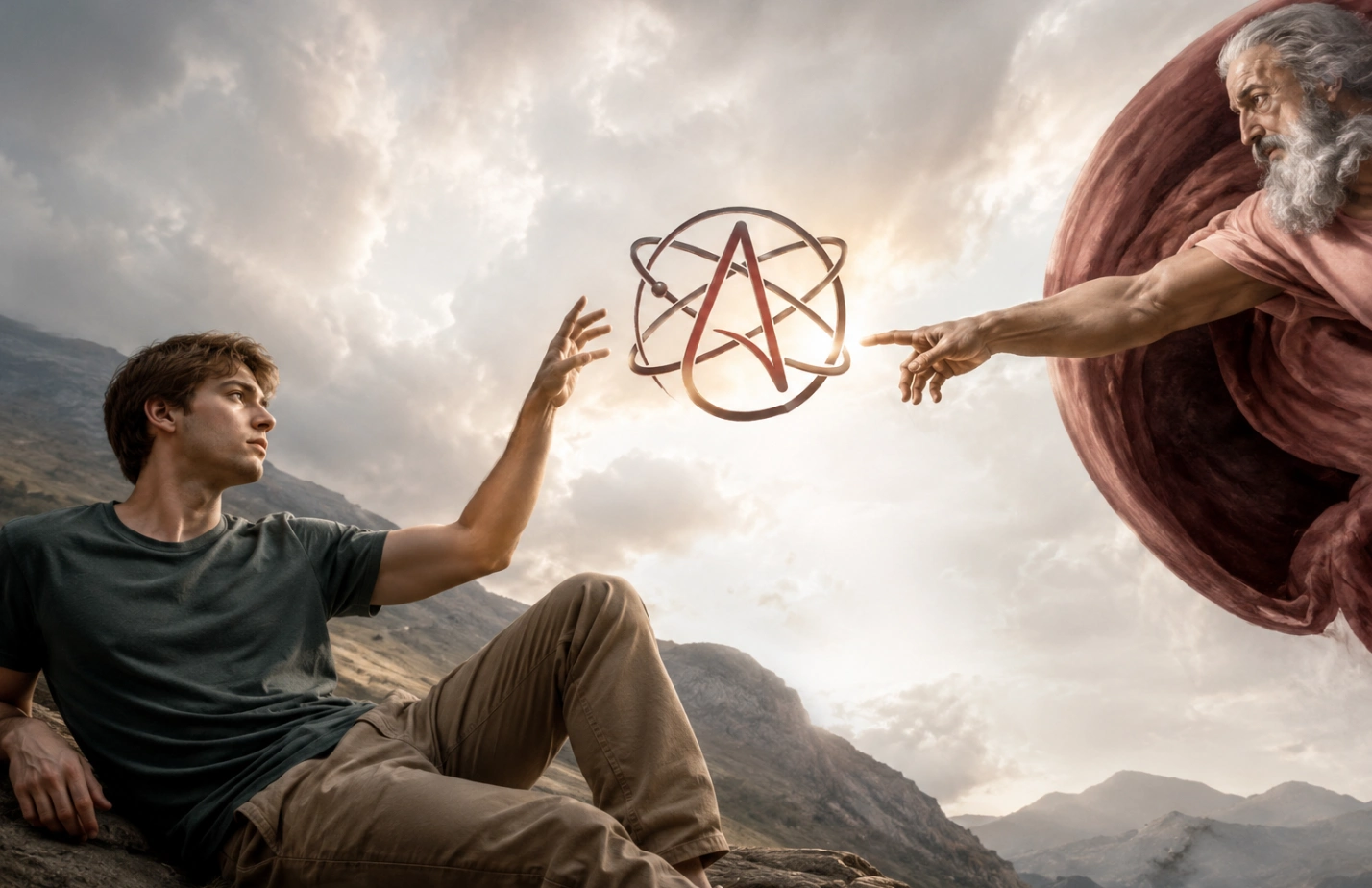
09-02-2018 - Posted by Andre PietLast week I read a newspaper report under the headline “Atheism Gains Ground Among the Youngest Generation in the U.S.” A few quotations:
Atheism is making an unstoppable advance among the youngest generation in the United States.
(…)
“For Generation Z (= born after 1999; AP), atheist is no longer an insult,” the research organization writes. The percentage of teenagers who identify themselves this way doubled compared with adults: thirteen percent versus six percent. Identification with the Christian faith decreases with each generation, Barna concludes.
(…)
More than older people, teenagers and young adults wrestle with the problem of evil and suffering. “It appears that today’s youth, like so many people throughout history, struggle with the question of how the existence of evil can be reconciled with a good and loving God.”
Meaningless?
This final quotation brings us to the heart of the matter. Atheism, considered by itself, is an unnatural philosophy. After all, every human being naturally searches for the meaning of his or her existence. That very search presupposes that we assume our existence has meaning – that is, a purpose. And that assumption implies the existence of Someone who conceived and made us for a reason. Whether people realize it or not, the question of the meaning of our existence has a religious motive. Who can live with the thought that existence is meaningless without becoming gloomy and depressed?
Unmistakable Design
It is this natural longing for meaning and purpose that leads to an awareness of God. But a person cannot escape that conclusion intellectually either. Everything in (living) nature cries out to us: design! From a living cell to an organ to an entire organism, we encounter layer upon layer of evidence for ingenious design. The idea that all of this could have arisen randomly and by chance is downright bizarre.

Click the image to enlarge.
Atheism Is Religious
But if atheism is indeed so contrary to common sense and feeling, what moves people to become atheists? The reason lies in “the problem of evil.” Or, as the newspaper report above phrases it: “How can the existence of evil be reconciled with a good and loving God?” Atheism denies God because people want nothing to do with Him! In their experience, the existence of a good God cannot be reconciled with the presence of evil – suffering, sickness, and death – in this world. Either He is not God, since evil could get out of His control, or He has evil intentions toward His own creatures – but then He is not a good God. In fact, this makes atheism religious in nature. People are hostile toward and alienated from God.
Christians Come Up Empty-Handed
That atheism is gaining ground in the United States is remarkable. Could it perhaps be because mainstream Christianity has no answers to the great questions young people ask? At any rate, the fact is that the question of the origin of evil is shrouded in fog within Christianity. The sin of the first human pair is identified as the cause of evil in this world. There is something to be said for that. But when asked how that sin itself could have arisen, that is where the awkwardness begins.
“The ancient serpent” (Satan) is identified as the instigator of that transgression. But that merely shifts the question. How, then, could Satan become satan – that is, an adversary? Usually, people reason that this celestial being, Lucifer, once “fell,” and they support this with scriptural passages that, incidentally, are not about Satan but about the ruler of Babylon (Isa. 14) and the ruler of Tyre (Ezek. 28).
Be that as it may, the question remains: how could Satan have come into existence? Once this question is reached, the fog within Christianity becomes complete. The question is declared a mystery. People dare not call God the Creator of Satan, but neither dare they describe Satan’s origin as a “workplace accident” – something unforeseen and unintended. A mistake, in other words. In short, when it comes to the origin of evil, they are groping in the dark.
There Is an Answer!
The biblical answer to the question of the origin of evil begins with the simple recognition that all is out of, through, and for GOD (Rom. 11:36). Sound thinking always begins with recognizing “God as GOD” (Rom. 1:21). Every line of reasoning that does not begin there gets off to a false start.
With this sound starting point, it is only logical that GOD solemnly declares through Isaiah that He is the Creator of light and darkness, of peace but also of evil (Isa. 45:7). Nothing happens for no reason, and everything serves its purpose (Prov. 16:4). In Scripture, there is no knowledge of good apart from knowledge of evil (Gen. 2:9). The presence of evil is necessary in order to make the good visible.
A good GOD who wishes to demonstrate His goodness (and love) had to give evil – as contrast – a place in His creation. Just as a painter needs black and dark shades for a painting. And just as a composer cannot possibly create a masterpiece without minor chords. How could an author ever produce a good novel without including wickedness, trouble, and sorrow? Contrast is a necessary element in every creative process. For the great Creator as well.
GOD’s work is not yet finished. Evil may not seem to rhyme with a good GOD. But that is a shortsighted judgment – a prejudgment. For it does rhyme… in the end. And that ending will be breathtakingly good, precisely because GOD will have turned evil completely to good! For all His creation.
Share: