 Dutch website
King Agrippa and Katwijk
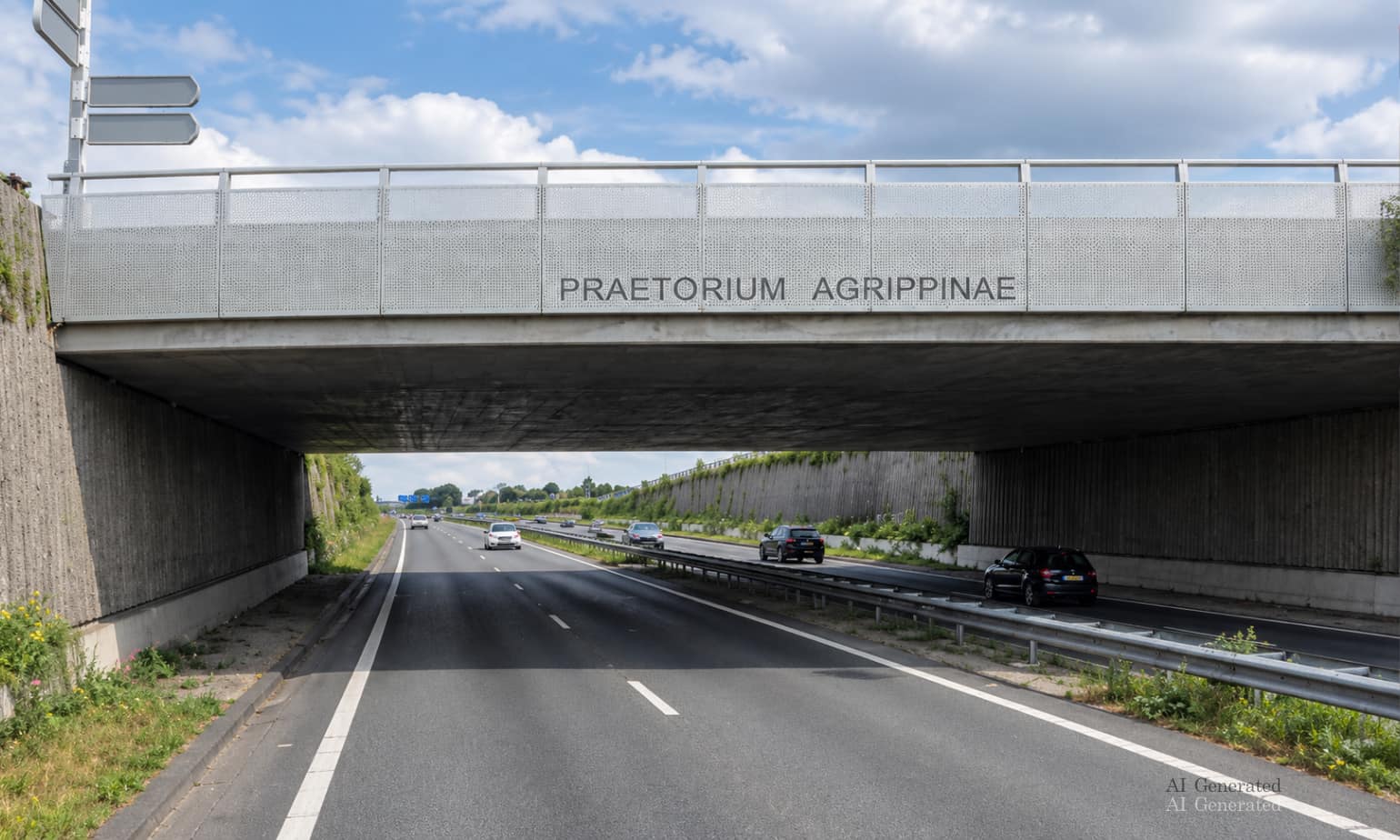
29-10-2026 - Posted by Geert-JanAnyone driving from Katwijk toward Leiden on the N206 (the Tjalmaweg) passes beneath an overpass near Valkenburg with a remarkable name: Praetorium Agrippinae. It is a reminder of our region’s Roman past, but behind that name lies a history that is surprisingly closely connected to the world of the New Testament. Through a Roman general and the family of Emperor Augustus, we find ourselves tracing a path to Herod the Great, his grandson Agrippa, and ultimately even the apostle Paul.
a Roman fort in Valkenburg
Nearly two thousand years ago, the Old Rhine formed the northern border of the Roman Empire, the so-called Limes (= border, pronounced: lee-mes). Along this frontier, the Romans had established a series of military camps, including a fort on the site of present-day Valkenburg. Archaeological research has shown that this fort was founded in the winter of AD 39–40, during the reign of Emperor Caligula. It was given the name Praetorium Agrippinae, meaning roughly “headquarters of Agrippina.” It was probably named after Caligula’s mother, although his sister Agrippina may also have been intended. The latter, incidentally, was the mother of the notorious Emperor Nero. In any case, both mother and daughter belonged to the Roman imperial family.
Caligula’s mother was a daughter of Marcus Vipsanius Agrippa, a famous Roman general and right-hand man of Emperor Augustus, whom we know from Luke 2:1 in connection with the birth of Jesus. This Agrippa (63–12 BC) was one of the most powerful men of his time and also a personal friend of Herod the Great. This is the Herod we know from Matthew 2 as the king who sought to kill the child Jesus. The Jewish historian Flavius Josephus gives a detailed account of the remarkable friendship between Herod and Agrippa. They visited one another, and Herod even received his Roman friend with great honors in Jerusalem. Their bond was so close that Herod named one of his grandsons after Agrippa.
And that brings us to a king whom we also know from the New Testament: Herod Agrippa I. This grandson of Herod the Great grew up in Rome, moved in the highest circles of the imperial court, and became a close friend of Caligula. When Caligula succeeded Emperor Tiberius in AD 37, he granted Agrippa the title of king and a territory of his own. And it is precisely this friendship that brings us back once again to the area around Katwijk!
a biblical king on Dutch soil near Katwijk?
In the winter of AD 39–40, Herod Agrippa I was in the company of Emperor Caligula, who during that period traveled with his armies to the far northwestern reaches of the Roman Empire. The emperor was preparing a military expedition against Britain and also visited the area around the mouth of the Rhine. Presumably, (pdf) his friend Agrippa accompanied him on this journey and therefore also visited the area around present-day Katwijk and Valkenburg.
Remarkably, it was precisely during this period that the Roman fort in Valkenburg was established. Archaeological excavations there even uncovered a wine barrel bearing a stamp with Emperor Caligula’s official name. A tangible reminder of the emperor, who may also have walked there with King Herod Agrippa. Right in the area where traffic now speeds along the N206!
All this took place around AD 40. These were the years when the apostle Paul was active in the regions of Syria and Cilicia, as he himself states in Galatians 1:21. While Roman armies were taking up their positions here on the North Sea coast, the events we know from the book of Acts were unfolding in the eastern part of the same empire.
And this King Agrippa, who may thus have visited Katwijk, appears a few years later in Acts 12. There we read how he had James, the brother of John, put to death by the sword and subsequently had Peter imprisoned as well. His reign ended dramatically in AD 44. When he addressed the people in Caesarea, dressed in his royal robes, and allowed himself to be acclaimed as a god, he was struck by a messenger of the Lord and died (Acts 12:20–23).
from Agrippa to Paul
But the connection between the name of the Valkenburg overpass and biblical history does not end there. Herod Agrippa I had a son who was also named Agrippa. This Herod Agrippa II was therefore a great-grandson of Herod the Great, and we encounter him too in the book of Acts. In chapters 25 and 26, we read how he visits the Roman governor Festus in Caesarea together with his sister Bernice. Paul is being held there as a prisoner at the time and is given the opportunity to testify before the king about his encounter with the risen Christ. During his defense, Paul puts Agrippa II on the spot, prompting him to exclaim: “Briefly are you persuading me, to make me a Christian!” (Acts 26:28).
Thus, in the book of Acts, we encounter two successive generations of Agrippas: the father in chapter 12 and the son in chapters 25 and 26. Both belonged to the Herodian family, which owed its position and power to a considerable extent to the Roman emperors.
And so we return to the Praetorium Agrippinae overpass in Valkenburg. The name leads us through the imperial family of Augustus and his general Marcus Agrippa to Herod the Great, his grandson Agrippa I, and his great-grandson Agrippa II. A history stretching from Rome to Jerusalem and Caesarea, yet traces of it can also be found less than a kilometer (as the crow flies) from my home.
Who would have thought that a name along the N206 could have such a surprising connection to the history of the New Testament?!
Share: